



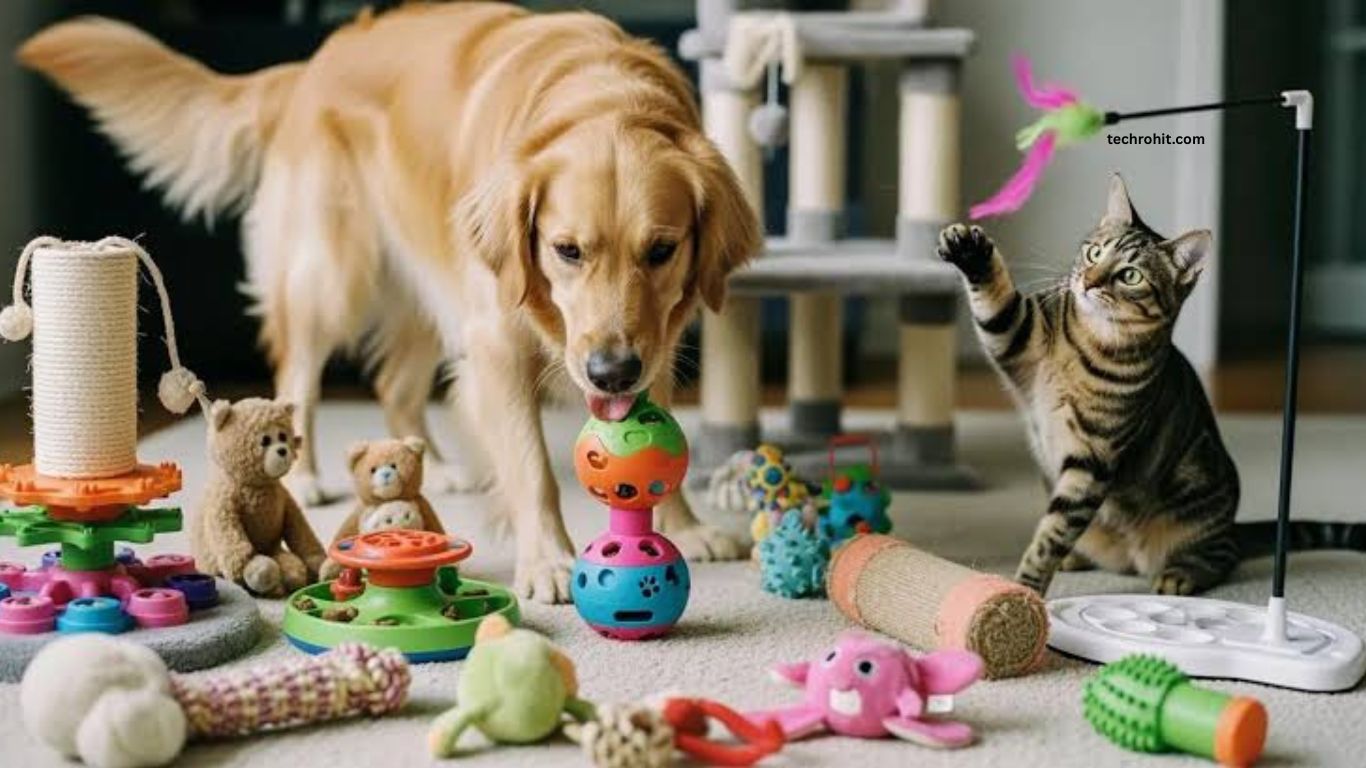
Keeping pets active, happy, and mentally stimulated plays an important role in their overall well-being. Dogs and cats need regular playtime to stay physically fit, reduce boredom, and enjoy a healthy daily routine. Choosing the right pet toys can make playtime more exciting while supporting natural behaviors such as chewing, chasing, scratching, and problem-solving.
The best pet toys combine fun, exercise, and mental stimulation. From interactive dog toys to engaging cat toys, there are many options designed for different ages, sizes, and play styles. Understanding which toys suit your pet can help create a safer and more enjoyable play experience.
Read More: Signs Your Pet Needs Immediate Veterinary Care
Why Pet Toys Are Important
Pet toys provide much more than simple entertainment. Regular play helps dogs and cats burn excess energy, stay active, and remain mentally engaged. Interactive play can also strengthen the bond between pets and their owners.
Toys can help reduce boredom, especially when pets spend several hours alone. A suitable toy can give them something constructive to do while reducing unwanted behaviors caused by frustration or excess energy.
Best Toys for Dogs
Dogs have different play preferences, so selecting toys based on their size, age, and chewing habits is important. Durable chew toys are excellent for dogs that enjoy chewing, while interactive toys can keep energetic dogs mentally occupied.
Interactive Puzzle Toys
Puzzle toys challenge dogs to find treats or solve simple problems. These toys encourage mental stimulation and can keep curious dogs engaged for longer periods. Treat-dispensing puzzles are particularly useful for dogs that enjoy food-based activities.
Durable Chew Toys
Chew toys are popular among dogs because chewing is a natural behavior. Strong rubber or specially designed chew toys can provide entertainment while helping redirect chewing away from household furniture.
Choose a toy appropriate for your dog’s size and chewing strength. Toys that become damaged should be replaced to prevent potential choking or swallowing hazards.
Fetch Toys
Balls, flying discs, and other fetch toys are ideal for active dogs. Playing fetch encourages running, jumping, and retrieving, making it a simple way to combine exercise with entertainment.
Soft or appropriately sized balls can work well for everyday play. Avoid toys that are too small for your dog, as they can create a choking risk.
Tug Toys
Rope and tug toys encourage interactive play between dogs and their owners. Tug games can provide physical activity while strengthening the relationship between pets and people. Supervision is recommended during tug sessions, particularly when a toy starts becoming worn or frayed.
Best Toys for Cats
Cats naturally enjoy activities that involve stalking, chasing, pouncing, and exploring. The right toys can recreate these behaviors in a safe indoor environment.
Wand Toys
Wand toys are excellent for encouraging cats to chase and pounce. Moving the toy across the floor or through the air can turn ordinary playtime into an engaging hunting-style activity. Interactive wand play also gives owners an easy way to participate in their cat’s daily exercise routine.
Catnip Toys
Catnip-filled toys can attract many cats and encourage playful behavior. Some cats respond strongly to catnip, while others show little interest. Experimenting with different toy styles can help identify what your cat enjoys most.
Balls and Chase Toys
Small cat-safe balls encourage cats to run, bat, and chase. Lightweight toys can provide independent entertainment, particularly when cats have enough space to move around safely.
Interactive Cat Puzzles
Puzzle feeders and treat toys provide mental stimulation by encouraging cats to work for small food rewards. These toys can help reduce boredom while adding variety to mealtimes.
Scratching Toys
Scratching posts, pads, and boards support a cat’s natural scratching behavior. They can also help protect furniture by providing a dedicated scratching area.
A scratching toy with a stable base and suitable height can be especially useful for cats that enjoy stretching while scratching.
How to Choose Safe Pet Toys
Safety should always come first when selecting toys for dogs and cats. Choose products made from pet-safe materials and select an appropriate size for the animal.
Inspect toys regularly for cracks, loose pieces, broken sections, or excessive wear. Remove damaged toys immediately. Avoid toys containing small detachable parts that pets could swallow.
Supervise pets when introducing unfamiliar toys, particularly strong chewers and young animals. Every pet has different habits, so observing how your dog or cat interacts with a toy can help determine whether it is suitable.
Toys for Puppies and Kittens
Young pets require toys designed for their smaller bodies and developing teeth. Puppies often enjoy soft chew toys, while kittens usually prefer lightweight toys that encourage chasing and pouncing.
Avoid toys that are excessively hard or too small. Rotating several suitable toys can maintain interest without overwhelming young pets.
Best Toys for Bored Pets
Boredom can affect pets that receive limited stimulation during the day. Food puzzles, treat-dispensing toys, interactive games, and rotating toy collections can provide variety.
Instead of leaving every toy available all the time, pet owners can rotate toys regularly. Introducing a familiar toy after several days can make it feel interesting again.
How Often Should Pets Play With Toys?
Daily play is beneficial for most dogs and cats, although the ideal amount depends on age, health, energy level, and personality. Dogs with high energy may need several active play sessions, while some cats prefer shorter sessions throughout the day.
Combining physical toys with mentally stimulating activities creates a balanced play routine. Owners should watch for signs of tiredness and allow pets to rest when needed.
How to Keep Pet Toys Interesting
Pets can lose interest when they see the same toys every day. Rotating toys can help maintain excitement. Combining different activities, such as fetch, puzzle games, chasing, and chewing, also provides greater variety.
For cats, changing the movement of wand toys can make play more engaging. Dogs may enjoy switching between chew toys, puzzle games, and outdoor fetch activities.
Benefits of Interactive Pet Toys
Interactive pet toys encourage pets to think, move, and respond to their environment. They can provide physical exercise while supporting problem-solving skills.
Food puzzles can also slow down eating for pets that consume meals too quickly. However, treats should remain appropriate for the pet’s overall diet and daily calorie needs.
Frequently Asked Questions
What are the best toys for dogs?
Chew toys, puzzle toys, fetch balls, and tug toys are excellent choices for keeping dogs active and entertained.
What toys do cats enjoy most?
Cats often enjoy wand toys, catnip toys, interactive puzzles, balls, and scratching posts.
Are interactive toys good for pets?
Yes, interactive toys provide mental stimulation, encourage movement, and help reduce boredom.
How often should pets play with toys?
Most pets benefit from daily play, with sessions adjusted according to their age, energy level, and personality.
How can I choose safe pet toys?
Choose appropriately sized, durable toys made from pet-safe materials and replace damaged toys immediately.
How can I keep pets interested in their toys?
Rotate toys regularly and introduce different activities to keep playtime fresh and engaging.
Conclusion
Choosing the best pet toys to keep dogs and cats entertained can support physical activity, mental stimulation, and healthy play habits. Interactive puzzles, chew toys, fetch toys, scratching posts, and chase toys offer enjoyable options for different pet personalities and natural behaviors. Safe and suitable toys can also reduce boredom and encourage stronger bonds between pets and their owners.

1 Comment
Pingback: Complete Guide to Caring for Puppies and Kittens - TechRohit