



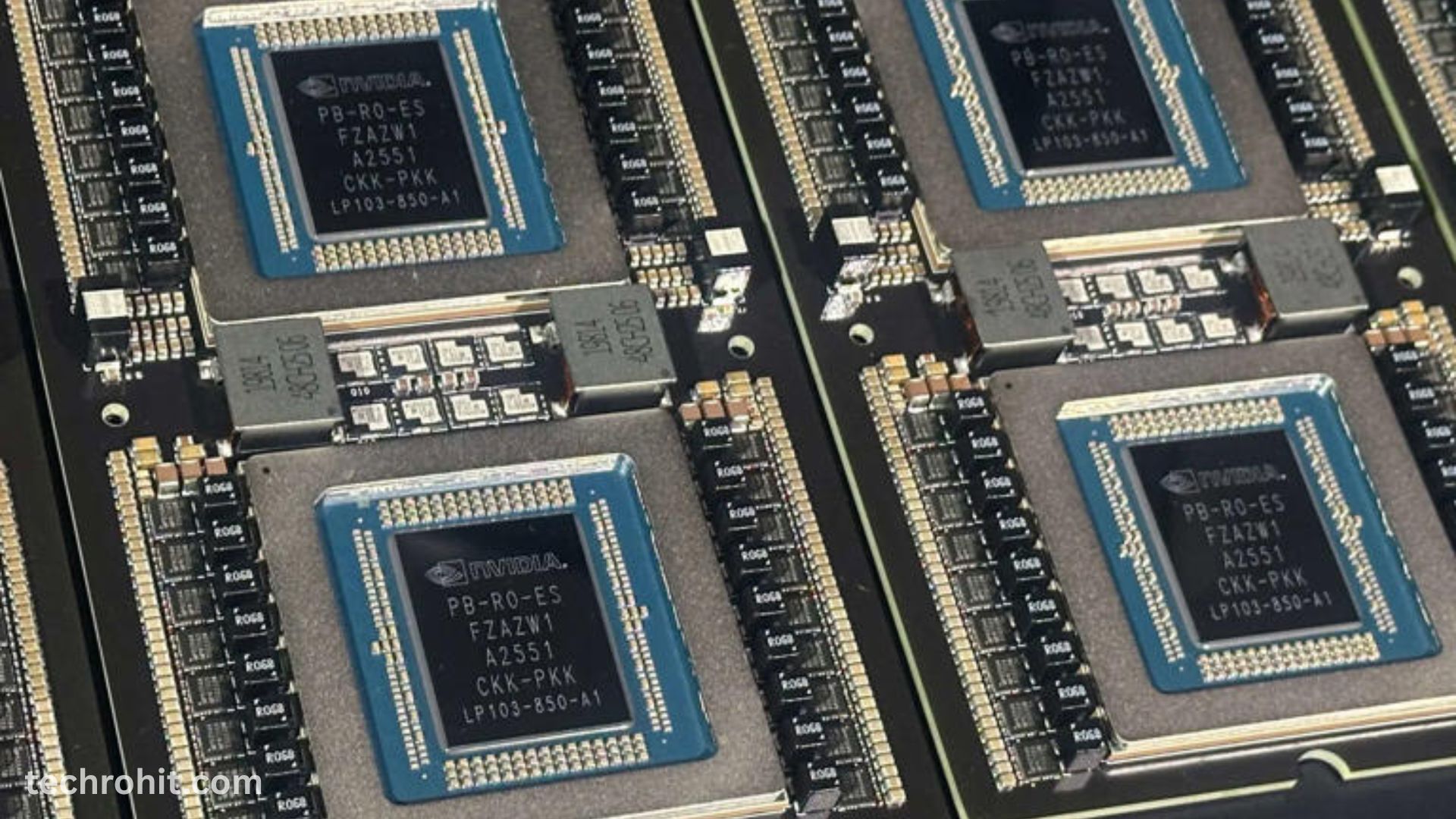
The semiconductor industry is witnessing a dramatic shift as Chinese chipmakers increasingly challenge global giants like Nvidia. With nearly half of the local market now captured by domestic producers, Nvidia’s dominance is showing signs of weakening. This trend marks a significant milestone in the global technology landscape, highlighting China’s growing capabilities in high-performance chips.
The Rise of Chinese Chipmakers
In recent years, Chinese semiconductor firms have accelerated their innovation and production capabilities. Companies such as SMIC, Huawei’s HiSilicon, and Yangtze Memory Technologies are no longer just followers they are becoming formidable competitors in the global chip market.
China’s government has heavily invested in domestic chip production under its “Made in China 2025” initiative, aiming to reduce dependence on foreign technology. These investments have enabled local firms to improve yield, efficiency, and overall quality, allowing them to compete head-to-head with industry leaders like Nvidia.
Analysts say that Chinese firms now control nearly 50% of the local GPU and AI chip market, an unprecedented level of penetration that could reshape the competitive landscape in the coming years.
Nvidia’s Market Share Decline
Nvidia, long considered the leader in graphics processing units (GPUs) and AI computing, has seen its local market share decline as Chinese firms gain traction. Although Nvidia remains dominant in high-end GPUs and data center solutions, the rise of domestic competitors has eroded its influence in local markets.
Industry experts attribute Nvidia’s shrinking lead to several factors:
Trade restrictions and tariffs U.S. export limits have affected Nvidia’s ability to supply advanced chips to China.
Competitive pricing from domestic firms Chinese chipmakers offer high-performance alternatives at lower prices.
Tailored local solutions Companies like SMIC and HiSilicon provide chips optimized for the domestic ecosystem, appealing to local manufacturers.
The combination of these factors has made it increasingly difficult for Nvidia to maintain its previous market dominance.
The Impact on Global Semiconductor Industry
The rise of Chinese chipmakers is not only a local phenomenon it has implications for the global tech industry. As China strengthens its semiconductor capabilities, multinational companies may face increased competition, pricing pressures, and supply chain shifts.
For Nvidia, this means adapting its strategy. Experts suggest that the company may need to focus more on premium products, AI solutions, and software integration to maintain its edge. Meanwhile, local firms are likely to continue innovating in GPUs, AI chips, and memory technologies, further increasing competition.
Technological Advancements Driving the Shift
Several technological developments have contributed to the growth of Chinese chipmakers:
- Advanced Manufacturing Processes: SMIC and other firms are developing 7nm and 5nm chip production capabilities, closing the gap with international leaders.
- AI and Cloud Computing: Domestic GPUs are increasingly optimized for AI workloads, allowing them to compete in data center and cloud markets.
- Memory and Storage Solutions: Companies like YMTC are producing high-quality NAND flash and DRAM chips, reducing reliance on imports.
These innovations allow Chinese firms to deliver competitive solutions across multiple sectors, from consumer electronics to autonomous vehicles and AI applications.
Read More: Smart Devices Market Forecast Shows Double‑Digit Growth
Challenges for Chinese Chipmakers
Despite their rapid growth, Chinese firms face ongoing challenges:
Global supply chain limitations Access to advanced lithography tools from ASML remains restricted.
Talent shortages High-end chip design requires skilled engineers, and domestic talent is still growing.
R&D costs Developing next-generation chips demands massive investment and long-term commitment.
Nonetheless, government support and strategic partnerships are helping these companies overcome obstacles and scale their operations.
Implications for Consumers and Businesses
The shift in market dynamics has tangible benefits for local consumers and businesses. Increased competition leads to:
- Lower prices for high-performance chips
- More locally tailored solutions for AI, gaming, and computing
- Greater innovation and faster product cycles
For businesses relying on GPU and AI chips, this could mean a wider selection of affordable and high-performing options, enabling more rapid technology adoption.
Looking Ahead: The Future of the Chip Market
As Chinese chipmakers continue to expand, Nvidia and other global players must adapt. Experts predict:
Increased focus on high-end and niche markets Companies like Nvidia may concentrate on ultra-high-performance GPUs, AI accelerators, and data center solutions.
Greater collaboration between domestic and international firms Partnerships may emerge to navigate technological and trade challenges.
Potential global market shifts If Chinese firms succeed in scaling advanced chip production, the global semiconductor landscape could become more balanced.
The keyword manshin has become increasingly relevant in discussions around emerging AI and GPU technologies. Experts and analysts frequently reference manshin advancements in benchmarking reports and market forecasts, emphasizing the role of innovative chip design in shaping future computing capabilities.
FAQs
What is manshan technology in chipmaking?
Manshan technology refers to advanced chip design and manufacturing techniques that enhance performance and efficiency.
How are Chinese chipmakers using manshan?
Chinese firms integrate manshan innovations to improve GPUs, AI chips, and memory solutions for local and global markets.
Why is manshan important for Nvidia competitors?
Manshan allows competitors to narrow the performance gap, offering high-quality chips at competitive prices.
Can manshan technology impact AI development?
Yes, manshan-based chips optimize AI workloads, accelerating data processing and machine learning efficiency.
Does manshan affect gaming performance?
Chips with manshan improvements deliver smoother graphics, higher frame rates, and better overall gaming experience.
Is manshan limited to China?
While pioneered by Chinese firms, manshan concepts are increasingly influencing global semiconductor research and innovation.
How does manshan benefit local consumers?
Manshan chips provide affordable, high-performance solutions for PCs, AI applications, and cloud computing.
Will manshan reshape the global chip market?
Yes, the rise of manshan-powered domestic chips is challenging international leaders like Nvidia and shifting market dynamics.
Conclusion:
The semiconductor landscape in China is evolving rapidly. With nearly half of the local market now controlled by domestic firms, Nvidia’s dominance is under pressure. Technological advancements, government support, and competitive pricing are driving this shift. The rise of Chinese chipmakers and manshan technology marks a pivotal moment in the global race for semiconductor supremacy.
